Unitree R1 EDU | U1-U6 | Humanoid Robot | Smart Version
Unitree R1 EDU U1 bis EDU U6 - Smart Version
The Unitree R1 EDU U1 to EDU U6 are programmable humanoid robots designed for research, education, and AI-powered robotics applications. All variants are based on the R1 EDU platform, featuring 26 degrees of freedom, a binocular depth camera, SDK2 and ROS 2 support, and an integrated 40-100 TOPS development computer. With Gigabit Ethernet, Wi-Fi 6, and Bluetooth 5.2, the systems can be flexibly integrated into development and research environments. Depending on the configuration, the platform can be equipped with three-finger or five-finger hands for grasping, teleoperation, imitation learning, and visuotactile research applications.
IDR 309,880,000
excl. VAT & shipping (are calculated in the final step)
Non-binding inquiry • No online purchase
- Cell design and component selection
- Programming & safety
- Installation
Still have a technical question?Clarify it for free with an RBTXpert
Highlights
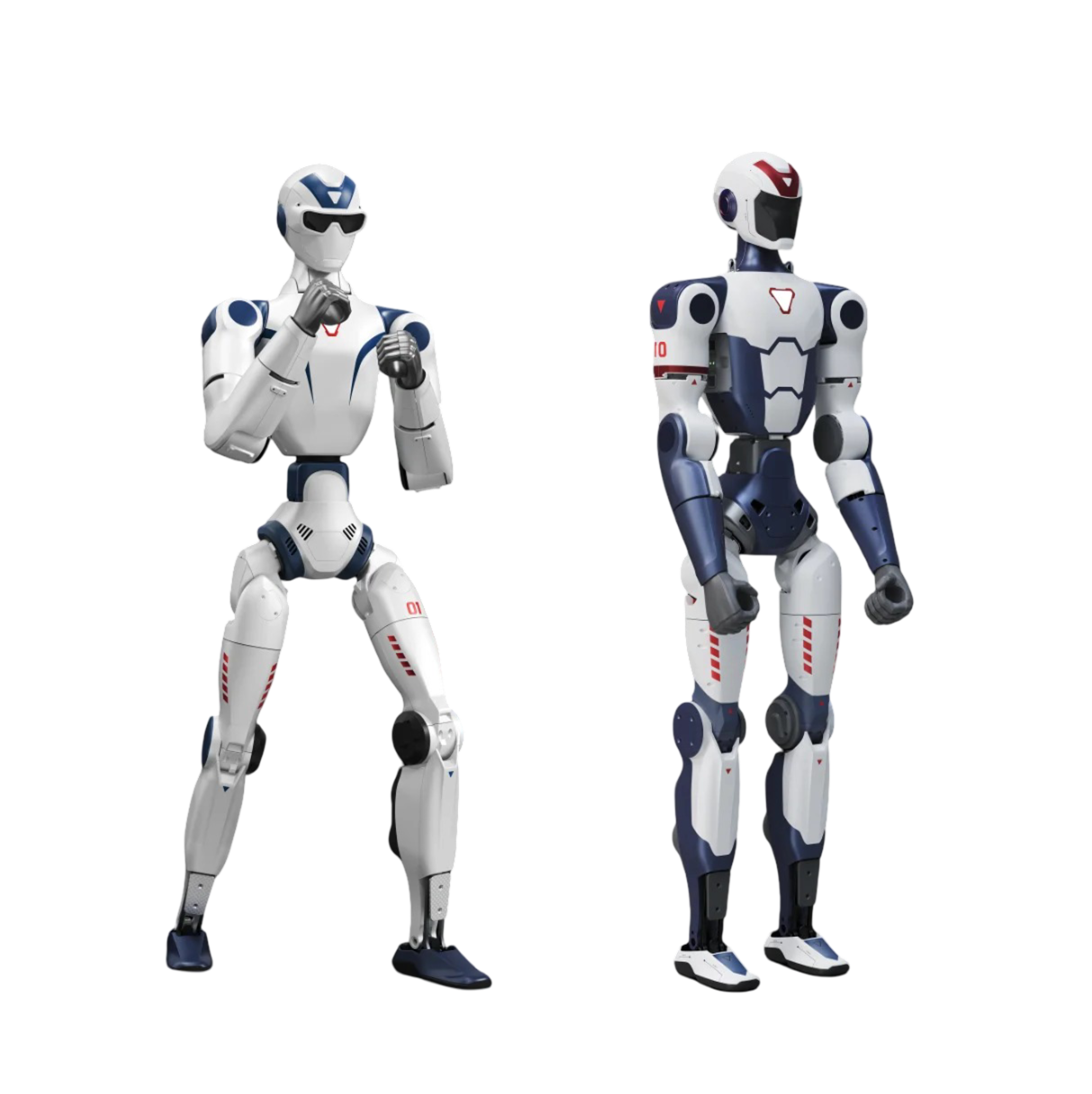
The differences between the development platforms
R1 Base → 26 DOF | 8-core CPU | Stereo camera | No secondary development support | Not programmable
R1 Edu U1 → 40 TOPS AI computing power | High-level & low-level programming | Isaac Sim compatible
R1 Edu U2 → +2 DOF in the head (28 DOF total) | 100 TOPS AI computing power
R1 Edu U3 → Dex3-1 | 2× three-finger hands | 40 DOF total
R1 Edu U4 → Dex3-1 | 2× three-finger hands with tactile sensors | 40 DOF total
R1 Edu U5 → BrainCo Revo 2 Basic | 2× five-finger hands | 38 DOF total
R1 Edu U6 → BrainCo Revo 2 Touch | 2× five-finger hands with tactile sensors | 38 DOF total
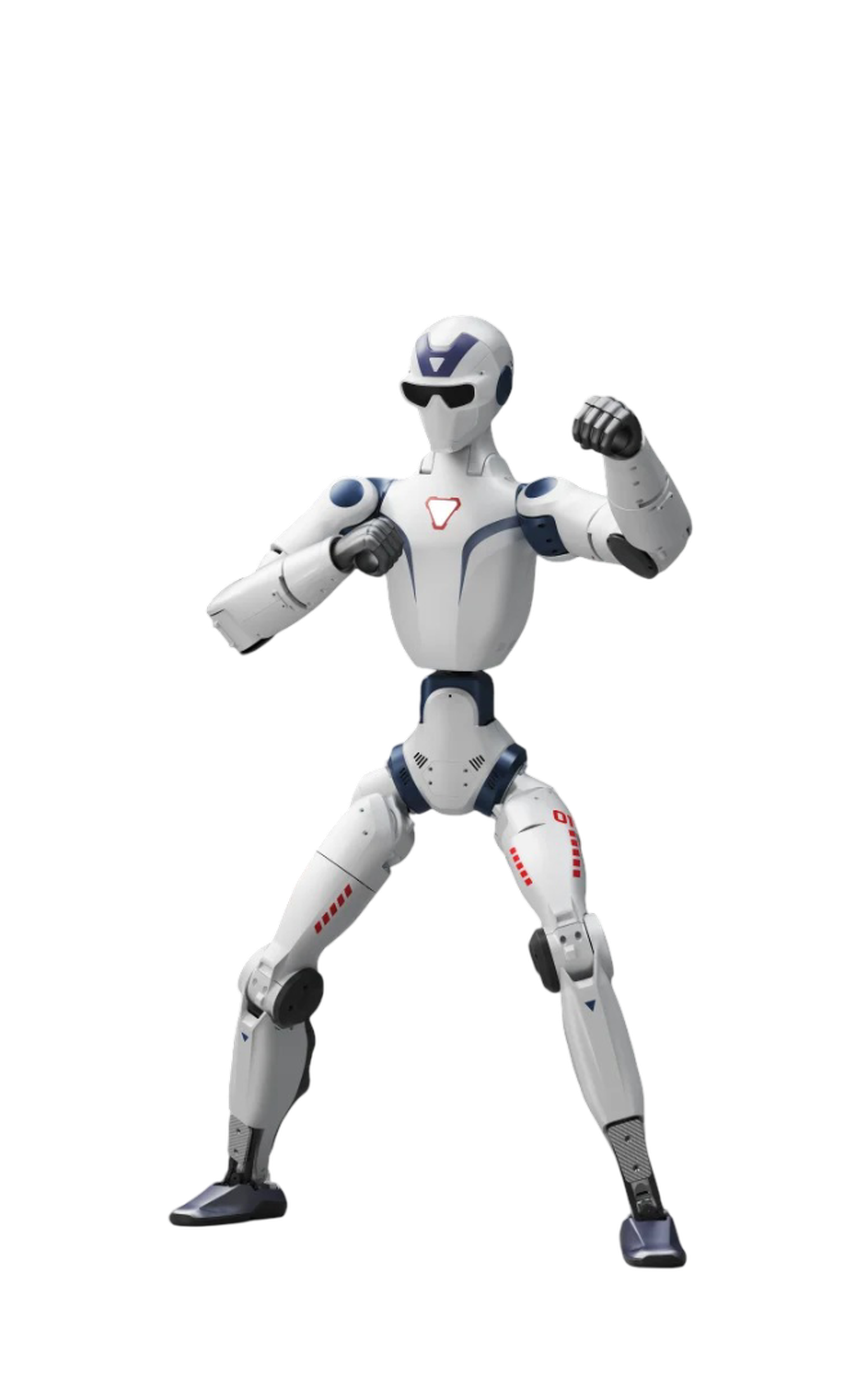
Unitree R1 EDU U1 – ROS-2 humanoid for research and development
The Unitree R1 EDU U1 is the entry-level version of the programmable R1 development platform. Unlike the Air and Basic models, only the EDU series officially supports secondary development and provides direct access to sensors, joint data, and the Unitree SDK2 interfaces. The robot combines 26 degrees of freedom, an integrated development computer with 40 TOPS of AI computing power, and support for ROS 2, CycloneDDS, as well as C++ and Python APIs. This makes the U1 an ideal platform for research projects in humanoid robotics, embodied AI, human-robot interaction, and whole-body control. Developers gain access to an open platform for custom algorithms, behavior models, perception applications, and autonomous functions without requiring additional external computing hardware.
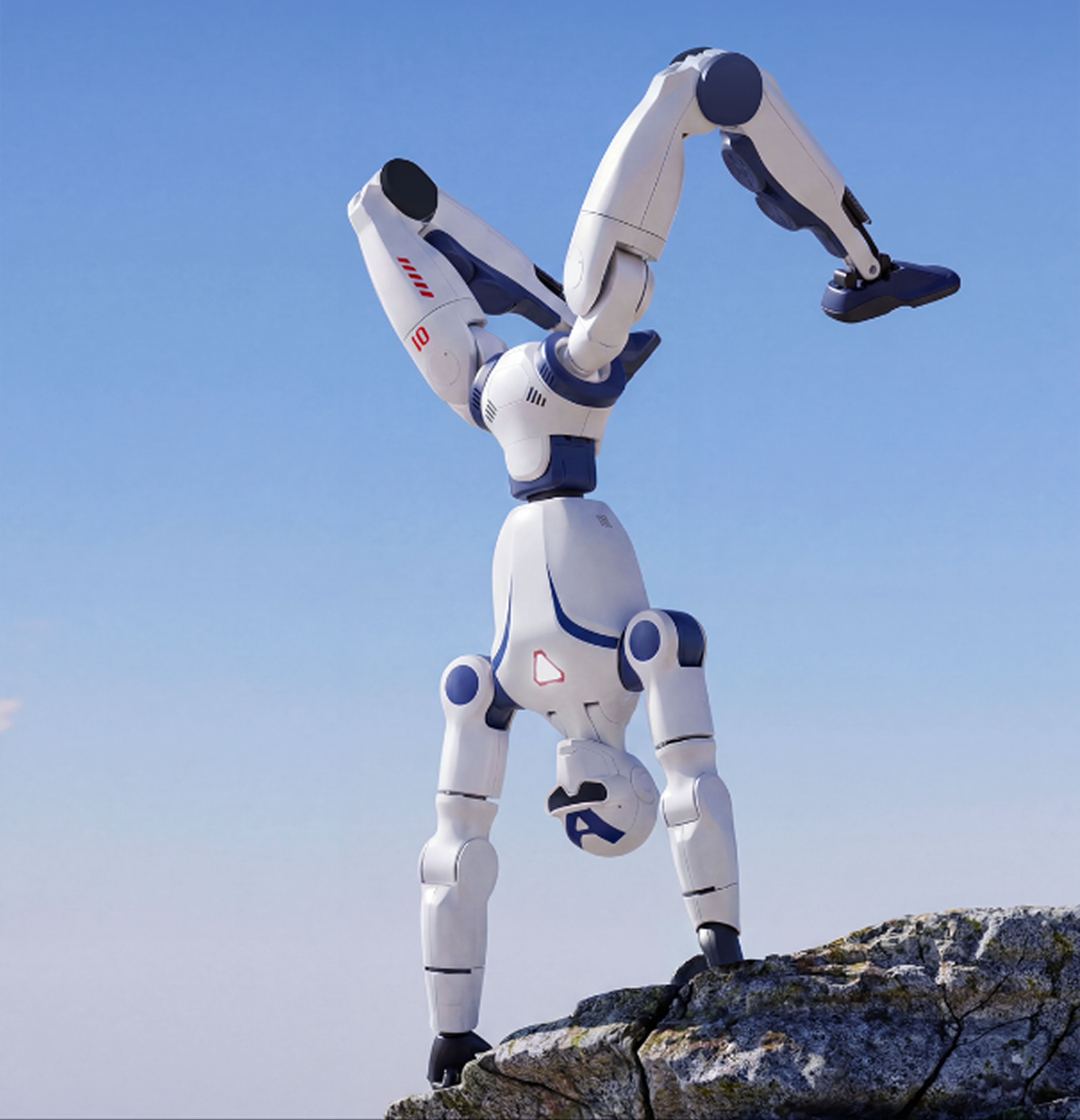
Dynamic Humanoid Platform the R1 EDU U1 with 26 Degrees of Freedom
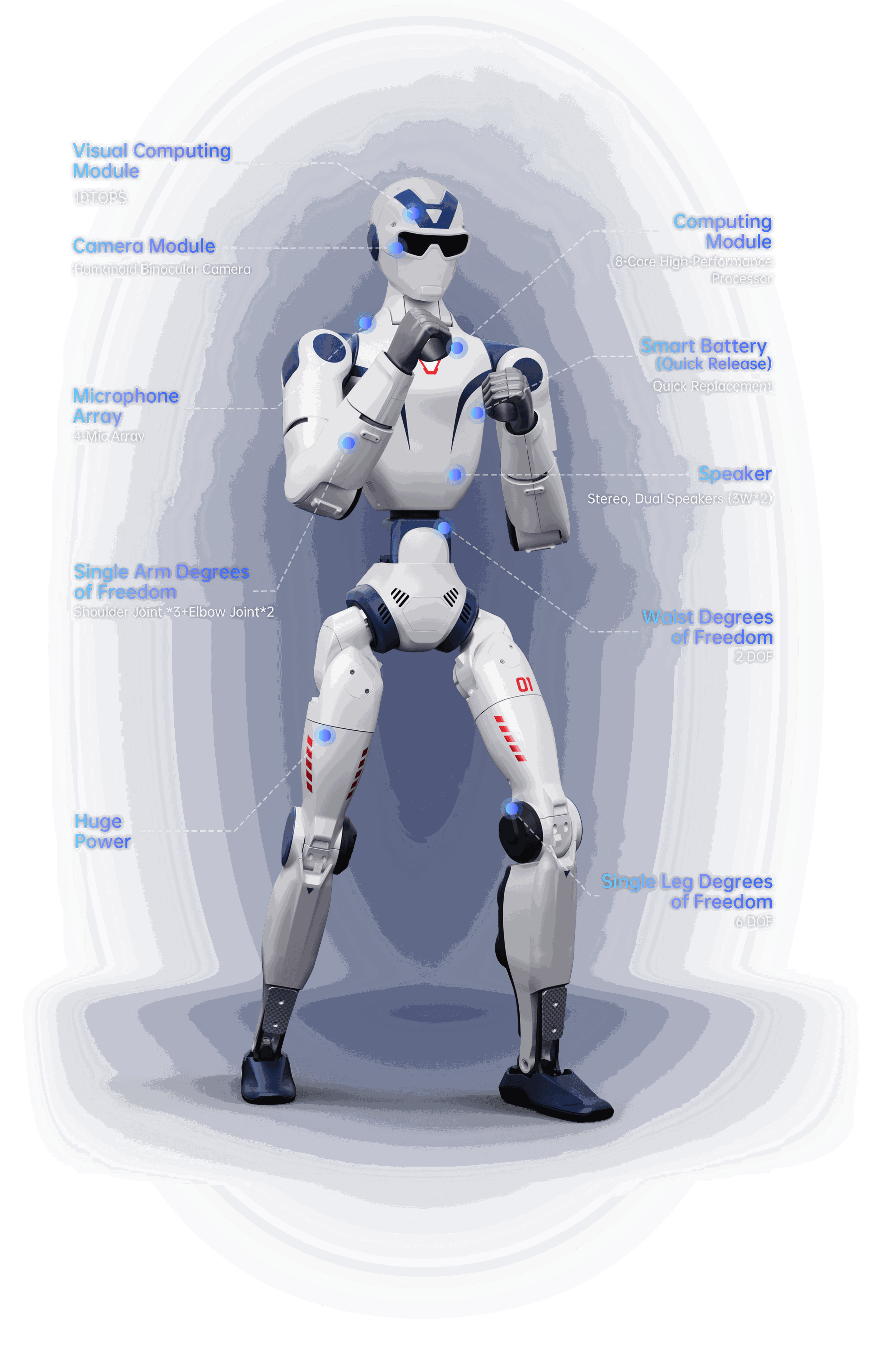
With a height of 1,230 mm, a weight of approximately 29 kg, and a total of 26 degrees of freedom, the R1 EDU U1 provides a compact humanoid research platform. Six degrees of freedom per leg enable dynamic locomotion and balance control, while five degrees of freedom per arm and two degrees of freedom each in the waist and head support natural full-body motion. The mechanical design incorporates PMSM actuators, integrated cable routing, cross-roller bearings, and double-row bearings to deliver high dynamic performance in a compact form factor. Thanks to its transport-friendly dimensions and swappable battery with approximately one hour of operating time, the platform can be easily deployed across laboratories, educational environments, and demonstration applications.
Stereo Vision and Advanced Communication Interfaces
For perception and AI-driven applications, the R1 EDU U1 features a binocular depth camera with a wide field of view of up to 146° horizontally and 124° vertically. The sensor suite is complemented by an IMU, joint encoders, a four-microphone array, and integrated speakers. The camera provides RGB data at 1280 × 1080 resolution along with depth information and supports both HDR operation and NIR illumination. Gigabit Ethernet, Wi-Fi 6, and Bluetooth 5.2 are available for seamless system integration. Through the SDK2 architecture, applications can be developed using ROS 2, DDS, Python, or C++. As a result, the U1 is well suited for autonomous navigation, voice interaction, computer vision, robot learning, and a wide range of AI-based research applications.
Designed for Education, AI, and Embodied AI Research
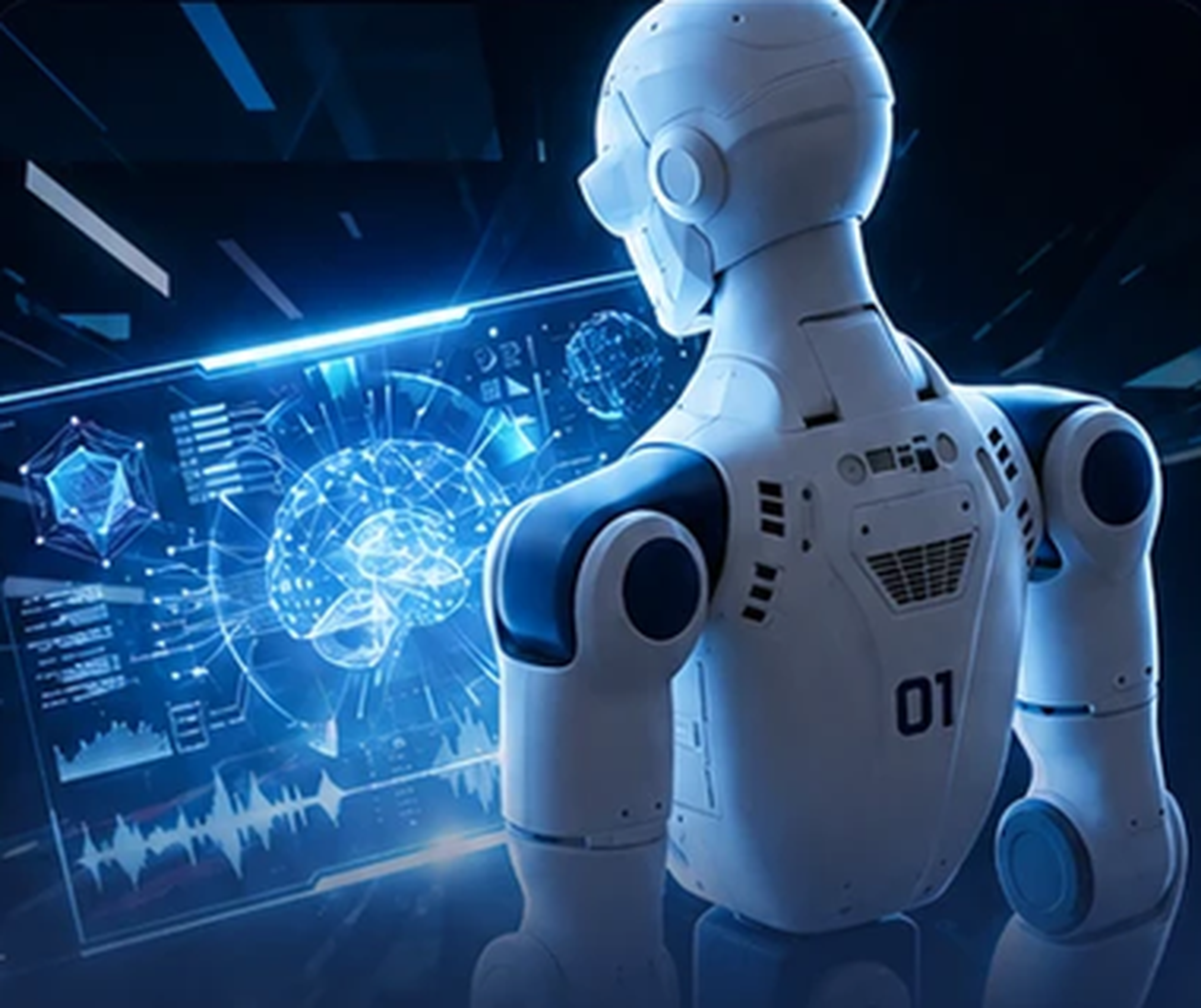
The R1 EDU U1 is specifically designed for universities, research institutions, and development teams seeking a cost-effective entry point into humanoid robotics. Its open software architecture allows users to implement custom motion control systems, perception algorithms, and AI models directly on the robot. Official URDF models, Gazebo support, and integration with the Unitree ROS environment simplify simulation, validation, and deployment to real hardware. The U1 is particularly suitable for research areas such as reinforcement learning, human-robot interaction, teleoperation, multimodal AI systems, and autonomous decision-making. Its compact size and comparatively low entry cost help reduce both space requirements and project risk when exploring first humanoid robotics applications.
Differences Compared to the other EDU Variants
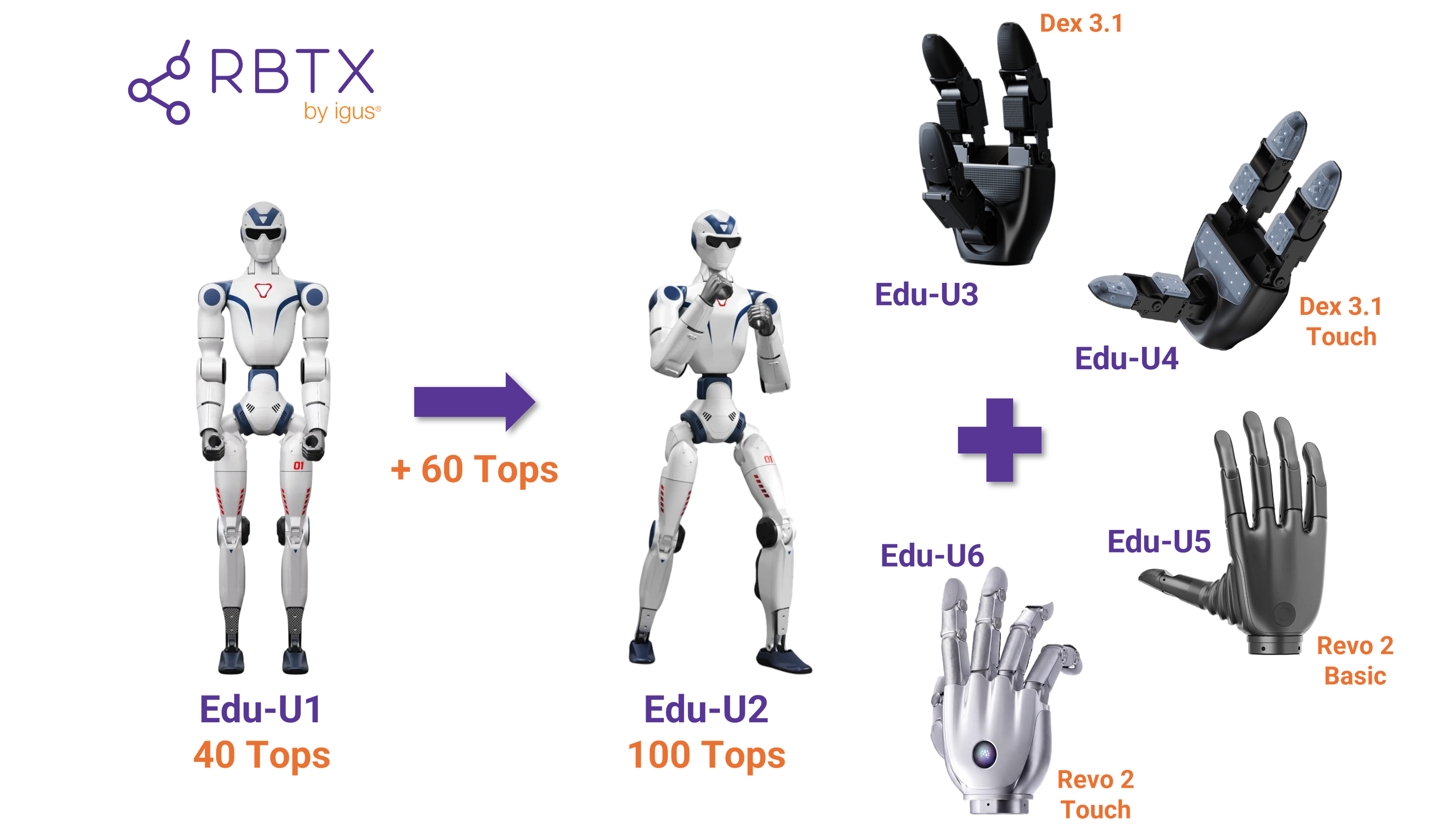
Within the EDU family, the U1 serves as the entry-level configuration with 40 Tops for research and software development. The mechanical platform remains identical across all EDU models, with differences arising from onboard computing performance and optional manipulation hardware.
- EDU U1: Comes with 40-TOPS development computer, no hands, ideal for ROS 2, SDK2, and introductory AI development projects.
- EDU U2: Identical platform with 100 TOPS of computing power for more demanding onboard AI workloads and inference tasks.
- EDU U3: Configuration with two Dex3-1 three-finger robotic hands without tactile sensing.
- EDU U4: Configuration with tactile Dex3-1 hands featuring integrated pressure sensors for visuotactile research.
- EDU U5: Configuration with two Revo 2 Basic five-finger robotic hands for anthropomorphic grasping and imitation learning applications.
- EDU U6: Configuration with Revo 2 Touch hands, including tactile sensing, EtherCAT support, and expanded research capabilities.
Scope of delivery
1× Unitree R1
1× battery
1× controller
1× charger
Item weight: approx.. 25kg
Shipping weight: approx. 40kg